Meriem Bennani and Arthur Jafa in
everything must change, 9th Thessaloniki Biennale of Contemporary Art
MOMUS Museum of Contemporary Art, Thessaloniki
On view until 05 July 2026
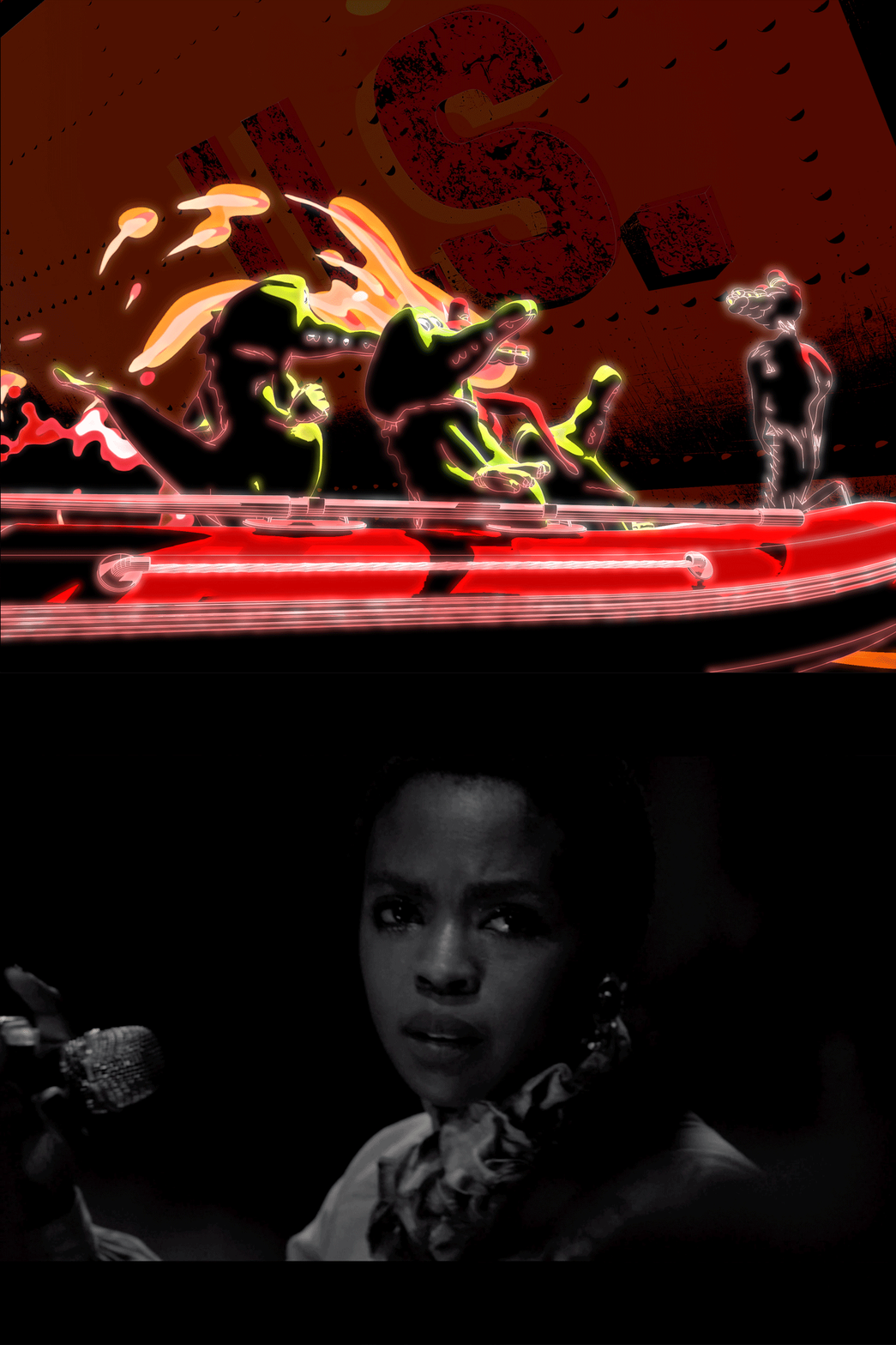
With the ambiguous title, everything must change. RIS9, the 9th Thessaloniki Biennale of Contemporary Art is organized by MOMUS and curated by independent curator Nadja Argyropoulou.
It engages with a common(place), yet (re)current, urgent, and plural demand that, with its punchiness, can feel like a revolutionary cry and echo like an empty slogan, ring like a rage bait and work like a charm; there is something in it for everyone, and it does not belong to anyone. It is a phrase that is now, more than ever, wielded by social revolutionaries and technofeudalists alike, by persecuted activists and fascist-adjacent demagogues, by rival social classes and diametrically opposed collective forms of expression, by countercultures and institutional propaganda. It is being used to erase the gap between the home and the streets, the click and the walk, to highjack ambivalence and twist solidarity.
As its curator notes, “Through its shared utterances, visual frequencies, think pieces, terrible mixtures and abundance of f(r)ictions and glitches; through its peripheral place and minor scale in the artworld; through its precarious position in the structural container and its economies, Biennale 9 employs a mode of close narration and is marked by what it proposes. It engages with the incommensurability between our available vocabularies and that which we are asked to describe; with forms of play, with fugitive tactics of dismantling, with collective magic, the feedback loop of call and response, or what Arthur Jafa has described as the ‘quantum dimension of emancipation.’ This ninth edition is cast as a para-biennale that acknowledges paradoxes of enclosure and escape, takes pleasure in errant paths and improvisation, and sides with tactics of joyful militancy and the intimate labor of attending to the unrecognized. If indeed, ‘in the face of new tyrannies encroaching, we should use art not to “ask questions” but to give audacious answers that nobody asked for’ (as per Luce deLire), Βiennale 9 enters by flipping questions, experimenting with an anarchy of answers, refusing the proper and the proposed in outright censorship but also beyond its obvious mandates. It takes a bold stance on the power of imagination, suggests a kind of intelligence that is radical (the shorthand ‘RI’), and sides with a non-fascist AI (as per Dan McQuillan) that does not reproduce forms of dominance but supports autonomy and freedom based on collective activity and suppressed knowledges.